Understanding Regulation – Why We Need This As Our Default State (Different States Series – Part 5)
Episode 123: Spotify | Apple Podcasts | YouTube
View transcript on Buzzsprout
What do you do when regulation is activating? When you find it hard to relax when life finally lows down or you find safety after years of survival mode?
Have you ever found yourself sitting on the couch your to-do list is done (or done enough), there’s no immediate crisis, and yet… your body can’t settle? You start scrolling, overthinking, or finding something else to “fix.”
If that sounds familiar, it did for me too, and still does sometimes. This can happen when your nervous system isn’t used to regulation.
In this episode, we explore what it actually means to have a regulated nervous system, why calm can feel threatening at first, how to recognize when you’re in a regulated state, and what helps you stay there longer.
What We Cover in This Episode
- What regulation really is (and what it’s not)
- Why safety and connection—not calm—define a regulated state
- Why “stillness” and “joy” can feel uncomfortable for chronically stressed systems
- How to recognize your body’s unique signals of regulation
- Tools and practices that help you cultivate and maintain this state
What It Actually Means to Be Regulated
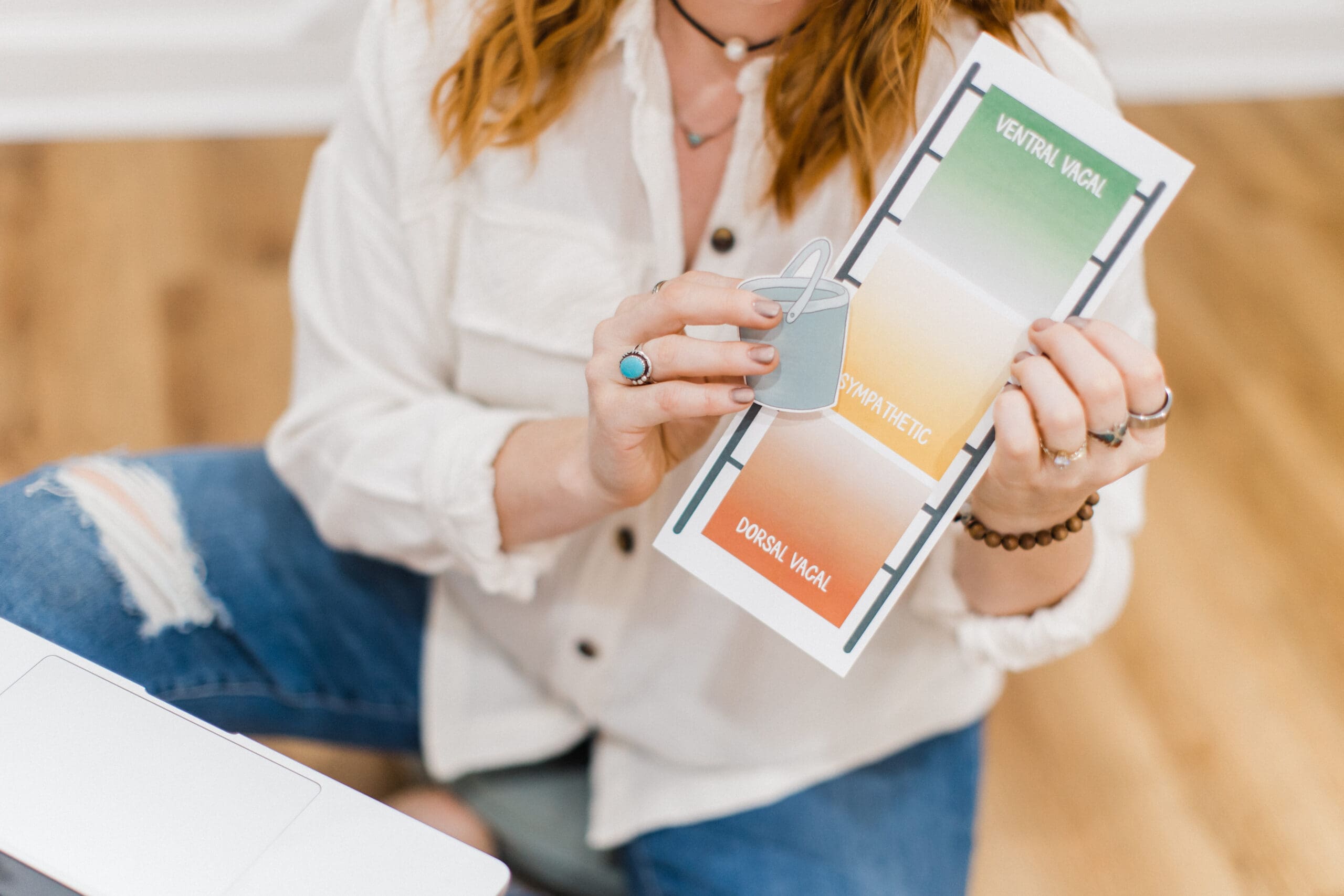
From a nervous system perspective, regulation happens when your body is receiving more cues of safety than danger. Physiologically, this means your ventral vagal system—the branch of your parasympathetic nervous system responsible for connection and social engagement—is online.
In this state:
- Your heart rate is steady and adaptable.
- Breathing deepens naturally, stimulating the vagus nerve and improving HRV.
- Digestion, immunity, and hormone balance all function optimally.
- You feel present, connected, and capable of handling what life brings.
Regulation isn’t about staying calm or happy all the time—it’s about having flexibility. You can experience anger, grief, or stress without getting swept away. You can move through challenge without losing your sense of safety or self.
Regulation is the ability to experience life with presence, flexibility, and internal safety.
Why Calm Can Feel Uncomfortable
If you’ve lived much of your life in survival mode—constantly on alert or pushing through stress—calm can actually feel foreign. Stillness can bring up anxiety. Joy can feel suspicious. Rest might even feel unsafe.
That’s because your system learned that staying alert was what kept you safe.
Parts of you might associate calm with danger or disconnection.
Through a parts work lens, that might look like:
- A vigilant part whispering, “If we let our guard down, something bad will happen.”
- A performing part fearing that slowing down means you’re lazy or unworthy.
- A protector part warning, “Don’t enjoy this—it won’t last.”
These parts aren’t trying to sabotage your healing. They’re trying to protect you. Recognizing and reassuring them allows your system to begin trusting safety again.
Recognizing Your Regulation Signals
Regulation can be subtle—especially if you’re used to intensity. Look for small shifts like:
- A softening in your chest or jaw
- Slower, steadier breath
- Thoughts becoming quieter
- A sense of curiosity instead of defensiveness
- Feeling present or even playful
You might notice these moments while petting your dog, cooking, or laughing with a friend. These are what I often call glimmers—brief flashes of safety and connection that teach your system, “This is what calm feels like.”
IFS (Internal Family Systems) calls this the 8 C’s of Self: Calmness, Curiosity, Compassion, Confidence, Creativity, Courage, Clarity, and Connectedness.
When those are present, your regulated self is in the driver’s seat.
How to Cultivate and Maintain Regulation
Regulation doesn’t happen by accident—it’s something we can proactively build through daily practices that nourish both the body and the mind.
1. Connection and Co-Regulation
We regulate best in safe relationships. Spend time with people who feel grounded, supportive, and authentic. Even small doses of co-regulation—like a hug, eye contact, or calm conversation—send powerful safety cues to your body.
If you’re craving that kind of supportive space, the Regulated Living Membership was designed to help you find it. Each month includes live classes, community support, and daily regulation practices that reinforce this work.
2. Creativity and Play
Your parasympathetic system thrives on joy. Paint, dance, sing, cook—anything that lets your body remember that life can be light. Play isn’t a luxury; it’s nervous system medicine.
3. Balanced Movement
Both gentle and challenging movement have a role. Slow walks, stretching, or yoga help you be in your body. Strength training or cardio build resilience and stress capacity. The key is balance—movement that honors your current state instead of punishing it.
4. Sensory Awareness and Interoception
Practice noticing what you see, hear, or feel in your body. This might look like color spotting, lateral eye stretches, or simply pausing to sense your heartbeat or breath. These moments remind your system: “We are here, and we are safe.”
5. Routine and Predictability
Your nervous system loves rhythm. Nourishing routines—steady meal times, consistent sleep, weekly rituals—help anchor your physiology in safety and stability.
6. Parts-Informed Regulation
When regulation feels hard to maintain, meet the resistant parts with curiosity:
“I know you’re worried about letting our guard down. What would help you feel safer right now?”
This internal dialogue builds trust between your protective parts and your present-day self—creating space for deeper, lasting regulation.
What Gets in the Way of Regulation
True regulation requires both adding supportive habits and reducing what drains your system.
That might mean addressing:
- Chronic overwork or perfectionism
- Unclear boundaries or draining relationships
- Cluttered, overstimulating environments
- Numbing habits like scrolling, alcohol, or constant busyness
As you make space for rest and connection, your body begins to remember: Safety isn’t something we earn. It’s something we can return to.
Three Tangible Takeaways
- Regulation is not calm—it’s capacity. It’s about your ability to stay connected to yourself while moving through life’s ups and downs.
- You have to learn to trust calm. If peace feels uncomfortable, it’s not a failure—it’s a sign your system is learning something new. Stay with it.
- Savor the micro-moments. When you catch yourself feeling grounded, safe, or at ease, pause and notice it. These tiny repetitions are what rewire your nervous system over time.
Looking for more personalized support?
- Book a FREE discovery call for RESTORE, our 1:1 anxiety & depression coaching program (HSA/FSA eligible & includes comprehensive bloodwork)
- Join me inside the Regulated Living Membership, a mental health membership and nervous system healing space (sliding scale pricing available)
- Join my Release Class – Monthly guided nervous system regulation class
- Order my book, Healing Through the Vagus Nerve today!
- Download free resources here
*Want me to talk about something specific on the podcast? Let me know HERE.
Disclaimer: This article is for informational purposes only and is not a substitute for professional medical advice, diagnosis, or treatment. Always seek the advice of your physician or qualified mental health provider with any questions you may have regarding a medical condition.